When considering the question of “Is the quality of Korean VPS good?”, it is necessary to take into account both technical and service aspects. The actual experience of VPS depends not only on virtualization performance but also closely on the operation level of the data center, network connectivity, operator policies, and after-sales maintenance. This article focuses on these influencing factors to help website owners and businesses make more informed decisions.
The facilities in the server room directly affect the first impression of the quality of Korean VPS. High-quality computer rooms typically have a stable power supply, UPS and generator redundancy, precision air conditioning, and strict physical security measures. Furthermore, the connection between the data center and international and regional backbone networks determines the quality of bandwidth and latency. Good connectivity can significantly reduce packet loss and latency for cross-border access.
Operator strategies include bandwidth allocation, traffic shaping, peak control, and resource allocation policies, all of which affect the actual user experience. Even with good hardware and server room conditions, unreasonable traffic management or over-selling strategies can also lead to “poor quality of Korean VPSs”. Transparent resource commitments, reasonable disaster recovery strategies, and clear SLAs are important criteria for determining whether an operator is reliable.
Bandwidth size is not the only criterion; link redundancy and multi-link interconnection ensure greater continuity of service. Multiple operator access and automatic failover mechanisms can maintain service continuity in the event of a failure in a single path, thereby improving the stability of Korea’s VPS services. For latency-sensitive applications, it is particularly crucial to choose services with low-latency routes and local caching nodes.
When evaluating the quality of Korean VPS services, one should pay attention to the investments made by the data centers and service providers in firewalls, DDoS protection, intrusion detection, data backup, and privacy compliance. Compliance includes local data protection regulations and cross-border transfer requirements. Adequate security and auditing capabilities can reduce business disruptions and legal risks, thereby enhancing the reliability of long-term operations.
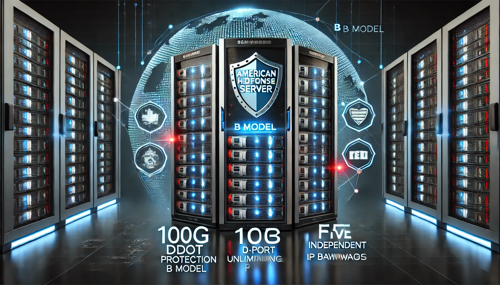
Hardware selection (such as CPU, memory, disk type) and virtualization technologies (such as KVM, Xen, containerization solutions) directly determine the performance limits. High-quality Korean VPS Enterprise-grade SSDs are typically used, along with CPUs that support hardware acceleration and stable storage arrays. Meanwhile, mature virtualization and isolation mechanisms help prevent the impact of “noise” from neighboring nodes on the performance of individual instances.
Even with good technical conditions, a lack of timely and effective customer support can make users feel that the quality of service has declined. To evaluate the quality of Korean VPS services, one should consider the vendor’s response time, the completeness of technical documentation, the process for handling failures, and whether proactive monitoring and maintenance services are provided. An efficient support team can quickly identify and restore services when issues arise, reducing business losses.
Without comparing specific prices, evaluating cost-effectiveness should focus on performance stability, SLA commitments, scalability, and after-sales support. By focusing on actual throughput, latency curves, resource elasticity adjustments, and backup/recovery capabilities, along with real-world monitoring data from trial periods or small-scale deployments, it is possible to more objectively determine whether Korean VPS services are of good quality and meet one’s own business needs.
It is recommended to first clarify the business priorities (latency, bandwidth, compliance, or cost control) when making a choice. Request the operator to provide a detailed network topology and SLAs, conduct periodic performance tests, and verify the failover process. At the same time, priority should be given to evaluating the qualifications of the server room, third-party audit reports, and user reviews. If necessary, communicate with the operator to develop customized operations or security solutions in order to reduce long-term risks.
There is no one-size-fits-all answer to whether “Korean VPSes are of good quality.”: Quality is influenced by various factors such as data center operations, operator strategies, bandwidth redundancy, hardware and virtualization, as well as security and maintenance. It is recommended to conduct a multi-dimensional evaluation based on your own business needs, focusing on verifying SLAs, network connectivity, and security compliance. Use trial operation data to finally confirm whether the service meets expectations, thereby making a sound decision.
- Latest articles
- Japanese Cloud Server Download And Migration Practical Guide In Offline Installation Scenario
- Comparing The Specific Requirements For German Independent Servers On The Capabilities Of Operation And Maintenance Teams From Hosting To Self-management
- Network Diagnosis Method For Vietnam Server Cf Game Commentary In A Cross-border Battle Scenario
- Comparison Of Performance Of Japanese Cn2 Lines In Operator Interconnection In Different Regions
- Are There Cloud Servers In Taiwan? Latest Market Supply And Purchase Channel Inventory
- How Enterprises Choose The Right Supplier To Deploy Hong Kong Cn2 To Enhance Overseas Access
- Assessing Buying And Selling Opportunities After The Decline In Housing Prices In Thailand From A Medium- To Long-term Perspective
- Analysis Of Application Scenarios Of Vietnam Cn2 In Cloud Host And VPS Selection
- Assessing The Attractiveness Of Cambodian Servers Alibaba Cloud To Small And Medium-sized Enterprises From A Cost And Performance Perspective
- Implementation Path Of Singapore Cloud Server Security Reinforcement From Firewall To Intrusion Detection
- Popular tags
-

Analysis And Impact Of Alibaba Cloud's Reason For Shutting Down Korean Servers
This article analyzes the reasons why Alibaba Cloud shut down Korean servers and their impact on users and industries. -

How To Quickly Find Where The Korean Native Cloud Server Is And Complete Secure Access And Monitoring Configuration
this article introduces how to quickly locate the location of korean native cloud servers, and provides practical steps for secure access and monitoring configuration to help operation and security personnel improve visibility and stability. -
Steps And Precautions For Modifying The Address Of Korean Cloud Server
This article introduces in detail the steps and precautions for how to modify the Korean cloud server address to help users complete the operation efficiently and safely.